

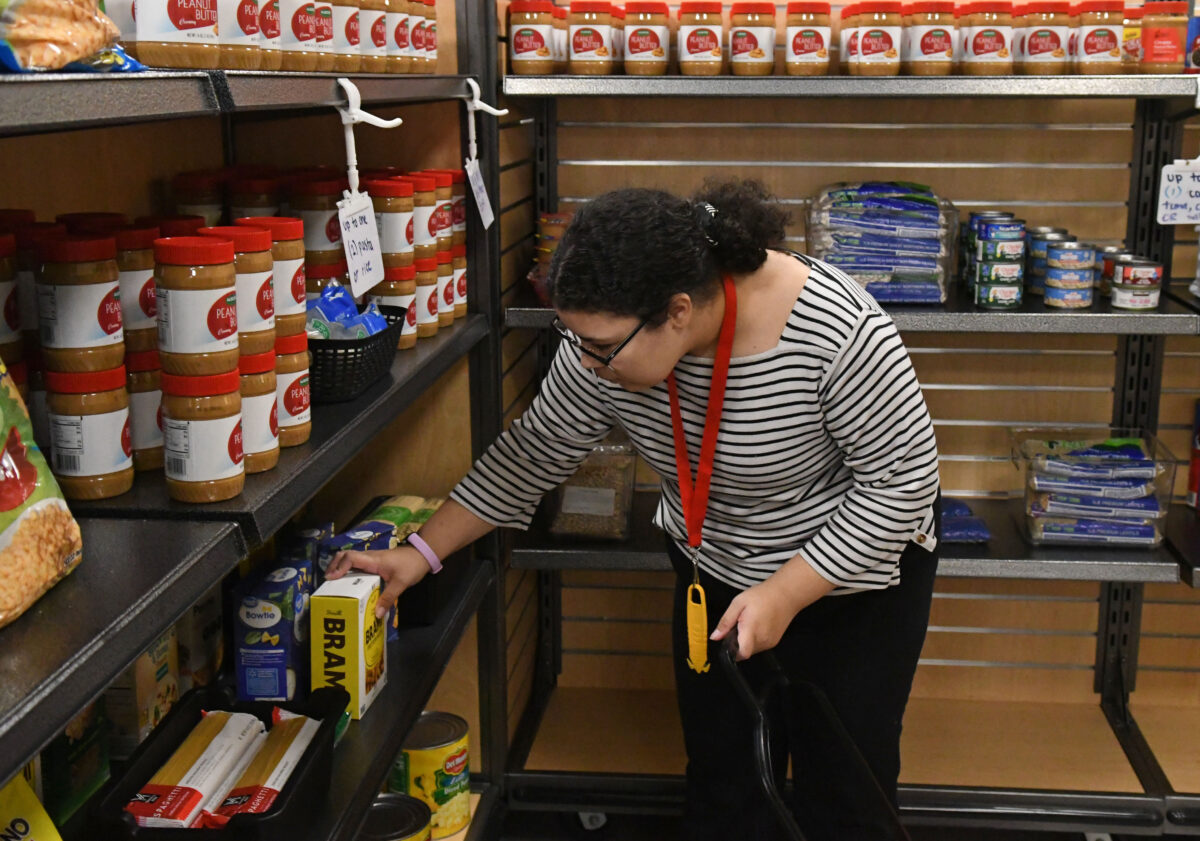
Food insecurity is a significant challenge for college students. This creates additional stress and affects their physical and mental health, which in turn impacts their academic performance. Asking for help isn’t easy. That’s why the Huskies Food Pantry, opened in January 2020, is founded on giving choice, respect and support.
A recent study found that 42 percent of SCSU students have experienced food insecurity, with many reporting that they: can’t afford balanced meals (51 percent), worry about food running out (44 percent) and cut portion sizes or skip meals (32 percent).
In response, the Huskies Food Pantry supported students through 9,719 pantry visits last year and distributed over 111,220 pounds of food. The pantry has served 1,665 unique students, approximately 16 percent of the student population.
The pantry’s journey has been one of adaptation and growth. It started in the James W. Miller Learning Resources Center, moved briefly to Atwood during the height of COVID-19 (when it operated more like a pickup service with deliveries for students who were sick or unable to leave home), moved into Case-Hill Hall and eventually returned to the Miller Center in the summer of 2024.
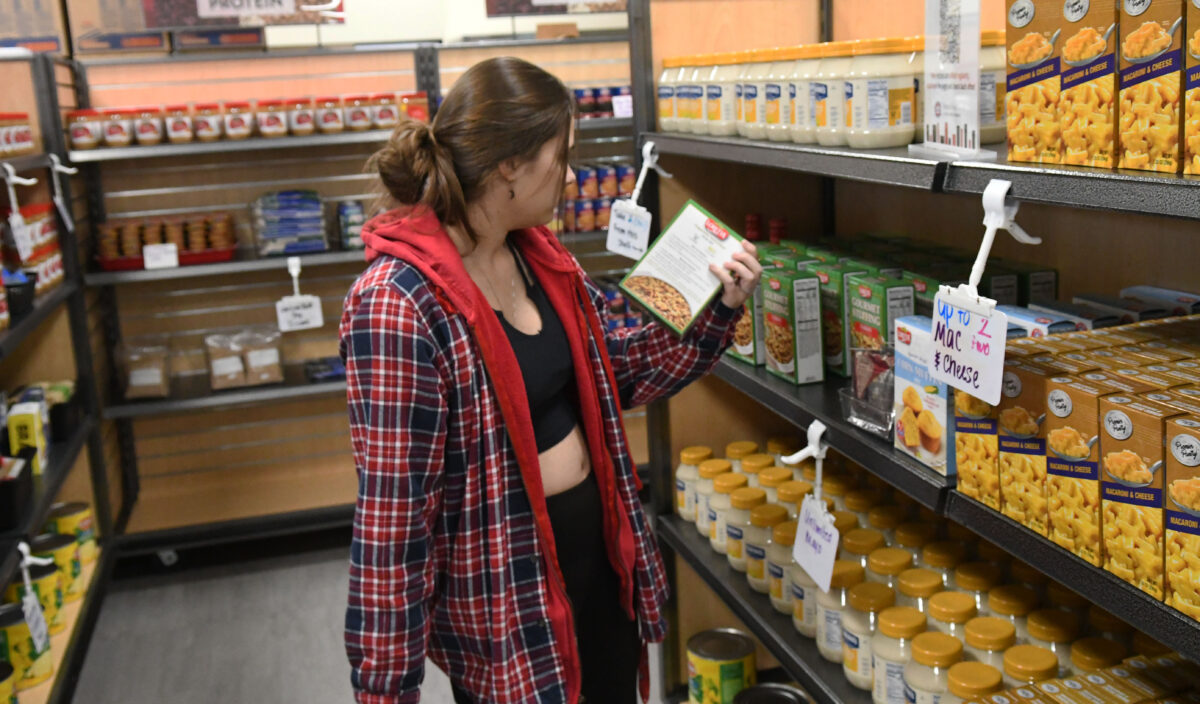
The new space, renovated with intention, now feels like a retail store. Shelves acquired from the campus bookstore line the walls, replacing the wire racks and folding tables of the past. Students can grab a shopping basket, browse clearly labeled sections, and choose the items they need. This is all part of a “choice model” that prioritizes dignity, autonomy and equity.
Campus-Wide Effort
Each week, about 250 students visit the pantry. Some students come regularly, others only when their grocery budget falls short. The pantry is open to all students, and the process is made simple: Shoppers fill out a checkout form with their student ID and household size, and the food they take is weighed to help track usage.
The pantry is staffed by a graduate assistant and student employees who manage day-to-day operations, including receiving shipments, restocking shelves, answering questions and prepping for delivery days. They’ve become experts in logistics, customer service and community care.
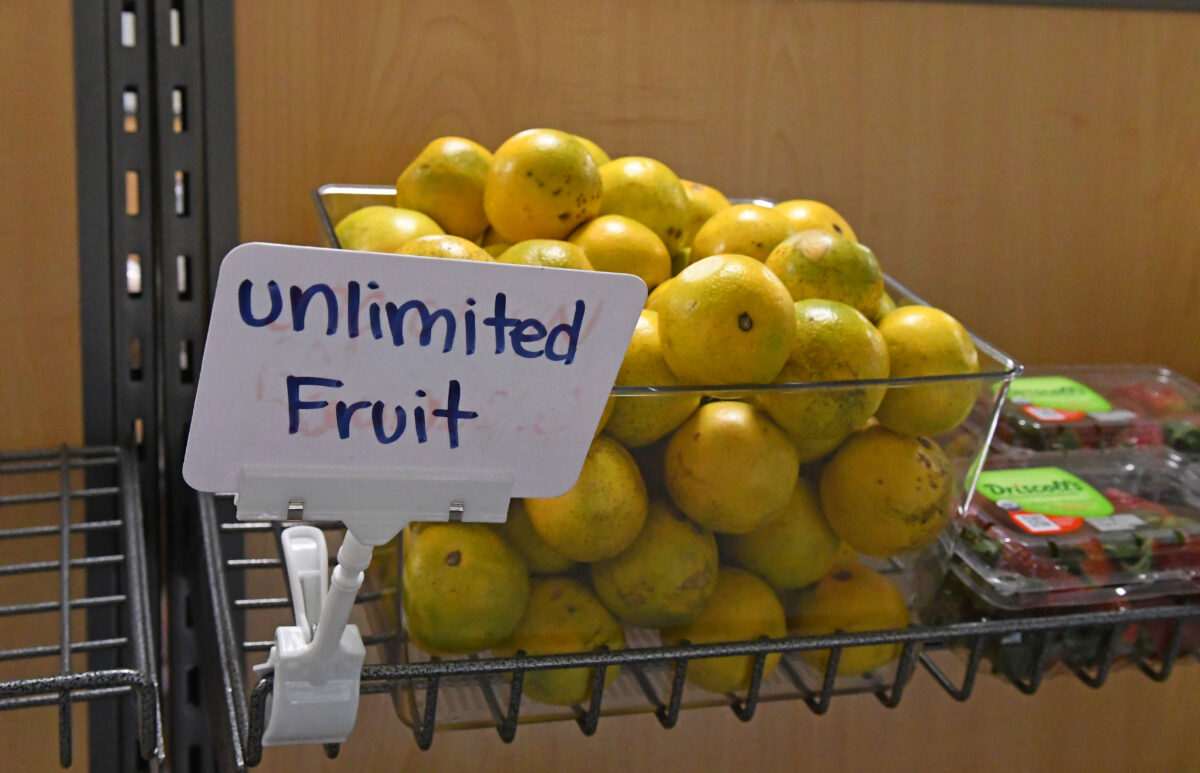
The pantry’s recent transformation was guided in part by the SuperShelf program, a University of Minnesota Extension initiative that helps food shelves create welcoming, health-focused environments. Staff learned how to merchandise shelves, prioritize fresh and nutritious items and design a space that feels intentional. Now, produce and dairy are the first things students see when they walk in, followed by proteins, grains and snacks. The layout encourages healthy choices and makes shopping easier. Perhaps most importantly, it gives shoppers a choice.
Some items are harder to source; baking supplies, condiments and spices are often in shorter supply at the pantry. Personal care items are also in high demand. Donations from faculty, staff and the community help fill these gaps. In-kind donations of shelf-stable goods and monetary contributions are especially appreciated. Athletics has hosted food drives at sporting events, and Herberger Business School has been a consistent supporter, with leadership helping spread the message that caring for and serving students is a shared responsibility.
New initiatives are even popping up across campus. Lindsay Kiffmeyer in Undergraduate Admissions is launching “Food Shelf Fridays,” encouraging departments to collect non-perishables and arrange pickups. Outreach to local businesses and wholesalers is ongoing, as the pantry seeks to build sustainable partnerships.
Hope for the Community
Part of the pantry’s success is due to its partnership with 501c3 non-profit humanitarian organization, Hope for the Community.
“If it weren’t for Al, we wouldn’t have it,” said Dr. Rebecca Peine, interim dean of students at SCSU. Dr. Alan Goracke ‘85 is the founder, president and CEO of Hope for the Community. He’s also an alumnus of SCSU.
Hope for the Community was born, in part, due to Dr. Goracke’s passion for both the business world and for serving people. Its foundation was also a response to The Great Recession from 2007-09.
The organization started out by helping families and elderly folks before expanding into campus food pantries, with its first college location opening at Anoka Technical College in 2019. Today, approximately 800 campuses have established food pantries compared to 80 campuses 10 years ago. Hope for the Community built partnerships with two local food banks in the Twin Cities, Second Harvest Heartland and The Food Group.
In its first week of operation, Hope for the Community served 27 families. In 2024, 14 years after it was founded, the organization served 96,000 families and 2.3 million pounds of food. Hope for the Community has become one of the largest food shelves in Minnesota.
In 2022, the Huskies Food Pantry was in operation, but it was more of a transactional model. There were no coolers for refrigerated items, no freezers for frozen meals, no countertops. Dr. Goracke wanted to serve his alma mater, so he reached out. With some funding, he helped transform the pantry into what it is today: a place designed to serve students.
With Hope for the Community as the pantry’s agency partner, the pantry can access food items through Second Harvest Heartland. This allows for the purchase of a high volume of food at a low cost. The pantry is supplied with everything from fresh produce and dairy products to frozen meals and shelf-stable goods.

Ever-Growing
Every week at the pantry is different. One week, there might be an abundance of black beans, and the next, a surprise delivery of ice cream. This summer, a pallet of large watermelons arrived. Staff weren’t sure students would want them, but they were snatched up quickly. One student even carried out a 34-pound melon, and there was a line the next day as more students waited to get their hands on the summer fruit.
“You never know what will resonate,” said Dr. Peine.
To help students make the most of what’s available, the pantry has started building out recipe cards — especially for surplus items that students may not otherwise know how to incorporate into meals, like raisins. It’s all part of a broader effort to make the pantry not just a resource, but a place of empowerment.
That’s how the success of the Huskies Food Pantry will continue — with partnership, vision and a whole lot of heart.
The Huskies Food Pantry relies on the support of the community. The pantry welcomes community business sponsors to donate bulk foods, supplies and services. Financial gifts and in-kinds donations are also welcomed. Interested individuals can find a list of donation needs and more on the Huskies Food Pantry website.

