

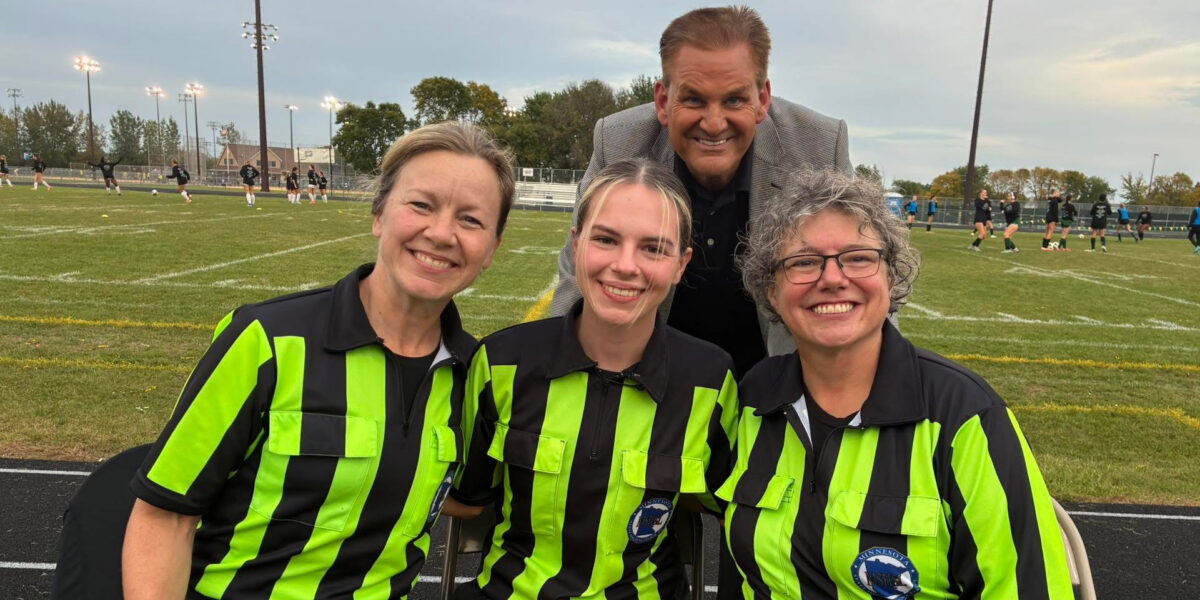
There are only three females in the Central Minnesota Soccer Officials Association, which makes the opportunity for all three to be scheduled for the same game extremely rare.
But this past fall, all three were assigned to the same game to make the first all-female crew in the 40-year history of the region’s high school officials association.
Assistant referees Erin Jurek and Amy Walsh joined St. Cloud State University exercise science student Mia Clark for a game between Sauk Rapids-Rice and Sartell girls on Sept. 30.
“We actually had all worked at St. Cloud Orthopedics; I had been an intern as a physical therapy technician, Amy is a doctor of physical therapy and Erin is a physician’s assistant,” Clark said. “It was special to have three women ref, because there had been times there was only one female official in the organization.”
The historic occasion generated media attention, including from WCCO News, who interviewed the three officials and had Clark mic’d up during the first half. It also enabled her to appear on the podcast Refs Need Love Too, where she was able to share her story.
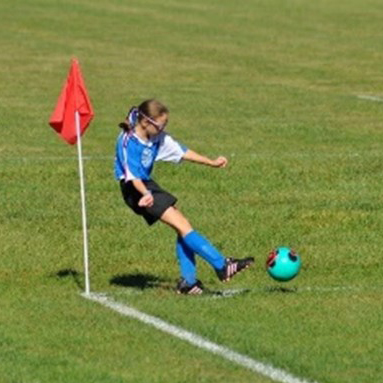
Clark grew up in Maryland and began playing soccer at 4 years old. She recalls officiating her first soccer match at 14 years old, where a rainy under-12 game was called early because of lightning.
She continued being an assistant referee, which are the officials commonly known for running along the side of the field and holding up a flag for an offside call.
“Being a ref gave me different insights into the game that helped me become a better player,” Clark said. “I never had a yellow or red card in 14 years of playing travel or high school soccer, which is hundreds of games.”
After finishing her high school career, Clark chose SCSU for college as an affordable option with an exercise science program that was close to her dad Brian in North St. Paul.
Her move to being a center ref, which are the officials who are in the center of the field with the whistle and hand out yellow or red cards, first happened when she stepped up during a travel soccer game when another referee was running late.
She started centering more when she began officiating local games again during the summer of 2024, and she quickly began to enjoy the added responsibilities of the position.
This past fall Clark was a ref for nearly 80 high school games in about a 2-month timespan. She scheduled her classes to be done by 1 p.m. each day so that she could ref back-to-back games or even tripleheaders in one night.
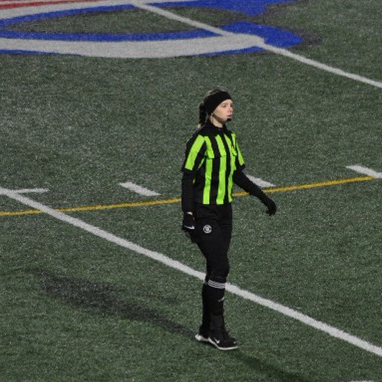
In only her second year as a high school official, she was a center ref for a state quarterfinals match and an assistant referee in the state semifinals.
Clark referees men’s and women’s games, but she has extra appreciation for the way women play. She has had the opportunity to work Minnesota Aurora games in the USL-W League, which is one tier below professional soccer. Those games include Division I players who may go on to sign pro contracts in the United States or Europe.
“As you get to more advanced level of competition, the refs are majority men; the retention rate for women is terrible and they’re so much more likely to quit,” Clark said. “I’m out there to do three things: give back to the sport that raised me, do a job correctly, and get paid.”
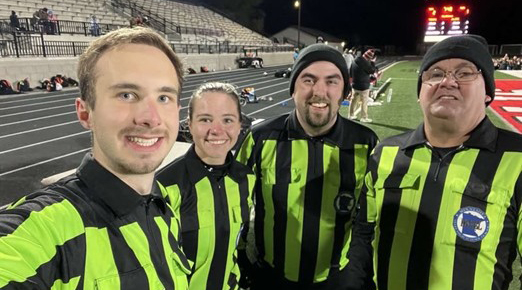
Nicholas Lalonde is a senior meteorology major at SCSU who has worked with Clark on dozens of occasions. He previously had thought he was the youngest official in the association before being paired with Clark for a match in Cold Spring.
The two quickly became friends and would carpool to games so they could ref together.
“It’s good to ref with someone you’re comfortable with, because it makes the games go better,” Lalonde said. “We’re about the same age and have thick skin, so we can be honest with each other on how we performed.”
He said that Clark’s confidence and decision-making have both progressed tremendously in their two years officiating together at the high school level.
“She talks a lot, where she is able to verbally explain calls to players and coaches and feel in more control of the game,” Lalonde said. “She’s also fit and able to stay in the play and be where she needs to. You gain more credibility if you’re engaged with the play.”
Clark said that level of credibility was key in earning respect as a young woman who was new to the area.
“I can’t stumble on my words, so I have to practice what I’m going to say,” Clark said about intense conversations with players or coaches. “I like being playful and relatable, but I’m stern when needed. I ref in a way that fits my personality.”
Clark plans to work a heavy load of games again this fall before she graduates in the spring of 2027 with her bachelor’s degree in exercise science. She next has her sights on graduate school to become a physical therapist.
While it’s impossible to please every fan or participant during a soccer match, she hopes her story can inspire more women to give officiating a try.
“We need more refs, so come join us.”